

Note: Names of organizations, offices, departments, etc. in the article are as of when the article was first published.
One day, while scrolling through my feed on X (formerly Twitter), a post from a homebuilder caught my attention. At the very beginning of the video, a T&D data logger briefly appeared—likely in the middle of a battery replacement. In the next scene, temperature and humidity data from a building was being visualized.
From what I could see, they were integrating T&D data loggers into their own system—apparently using real measurement data to evaluate building performance.
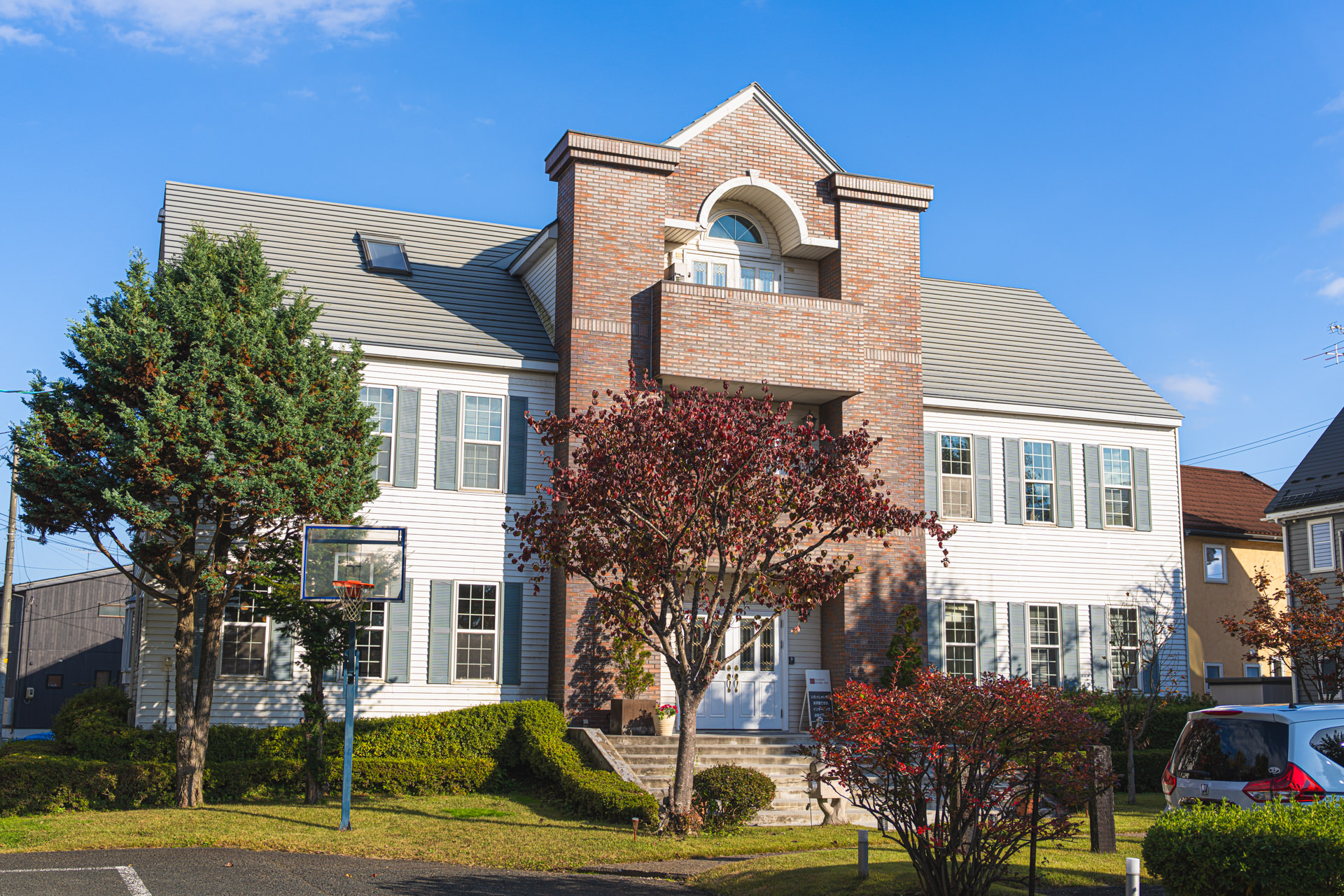
Curious to learn more, I reached out to request an interview. They kindly agreed, and we soon found ourselves visiting Daikyo Home (DAIKYO HOME Co.,Ltd.) in Iwate Prefecture, where we met with President Hashimoto.
In a region known for its harsh winters, Daikyo Home is exploring what it takes to create truly comfortable living environments—through data and real-world measurements.
| Date | October 30, 2023 |
|---|---|
| Place | DAIKYO HOME Co.,Ltd. |
| Models in Use | RTR-500AW, RTR-502, RTR-503 |
| Purpose | Collecting temperature and humidity data to improve housing performance and identify potential issues |
To start, could you tell us about your company?
Mr. Hashimoto
Our concept is to create homes that provide lasting warmth and comfort. Based in Iwate, we build highly airtight, well-insulated custom homes.
Achieving high levels of airtightness and insulation performance requires continuous technical development, along with skilled craftsmanship on site. In particular, we conduct experiments under a wide range of conditions and collect temperature and humidity data to validate insulation performance.
At the same time, we don’t rely on fixed design templates. Each home is tailored—our coordinators carefully listen to our clients’ preferences for layout and interior design to bring their vision to life.
Another key aspect of our approach is our careful selection of materials. This focus allows us to achieve consistently high insulation performance in every custom-built home.
You mentioned your approach to materials—could you tell us more about that?
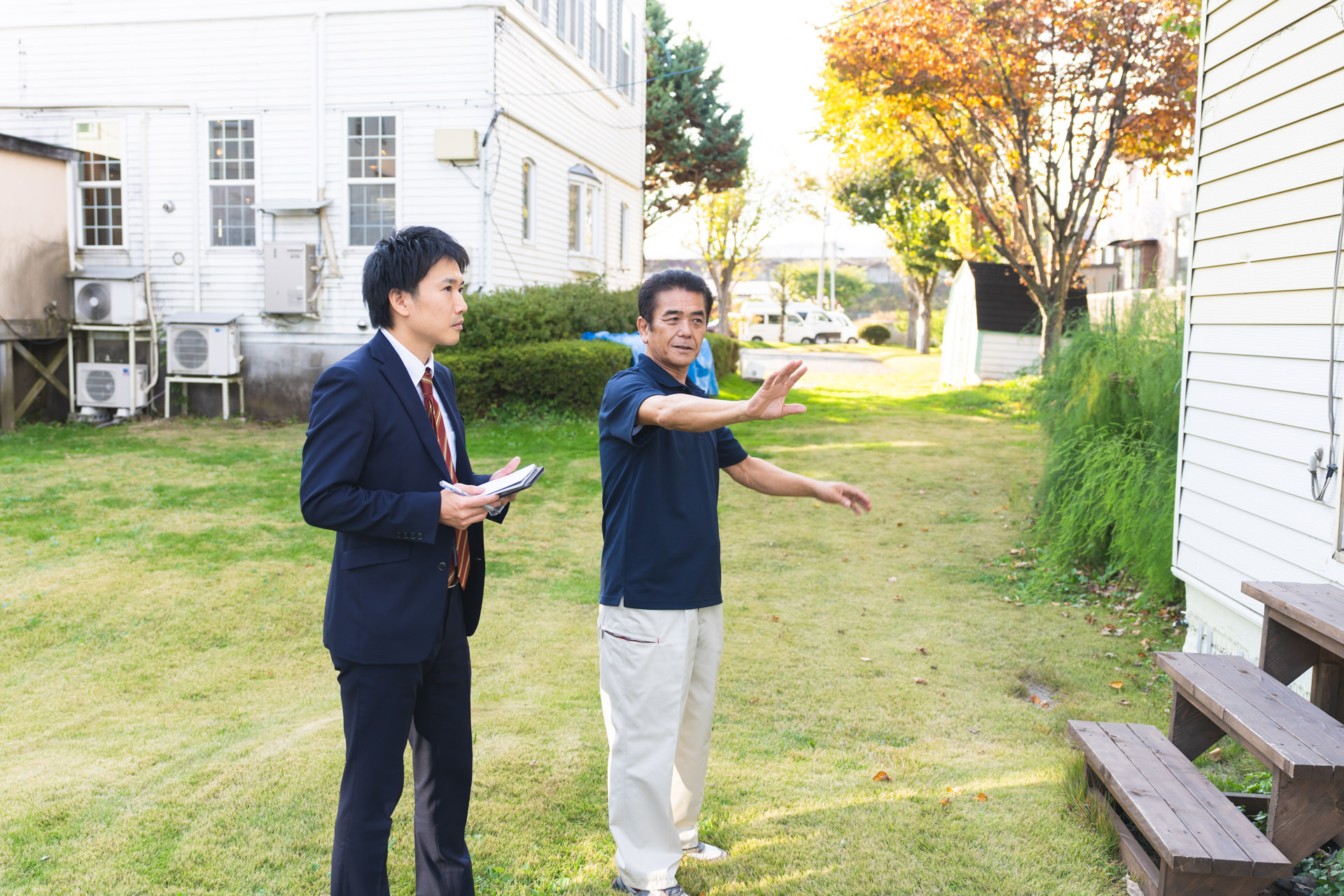
Mr. Hashimoto
We pay particular attention to windows and window frames.
To maintain a comfortable indoor environment throughout the year—regardless of outdoor conditions—insulation performance is critical. For example, in winter, a significant portion of heat loss occurs through windows, much more than through walls or roofs.
Today, high-performance windows such as triple glazing are widely used in many markets. We also use triple glazing, but we place special emphasis on the window frames themselves. We use imported window systems from Germany, Austria, and Turkey.
We also carefully consider how these frames are installed. Using T&D data loggers, we continuously collect temperature and humidity data to evaluate insulation performance under real conditions.
――What are the differences between overseas and Japanese window systems?
Mr. Hashimoto
Overseas window systems tend to have more complex internal structures, making it harder for heat to escape.
In Japan, the adoption of high-performance insulation has accelerated in recent decades. In contrast, countries like Germany have been using triple-glazed windows for decades and have long supported their performance with measurable data.
We take a similar, data-driven approach—collecting temperature and humidity data to verify performance through real measurements before incorporating new technologies into our homes.
――We moved to a model home where Mr. Hashimoto showed us how T&D data loggers are installed.
Where are the data loggers installed, and how are they used?
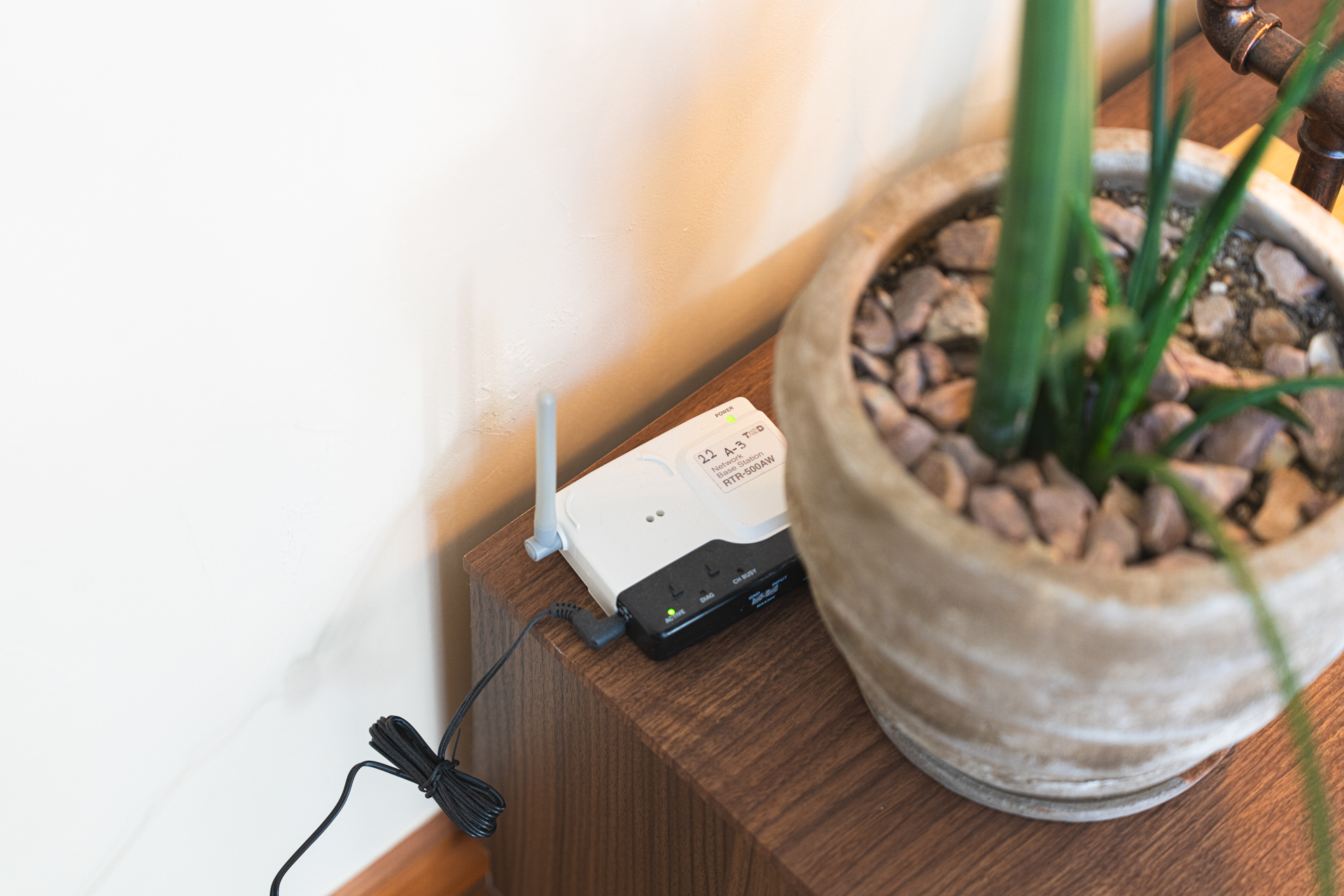
Mr. Hashimoto
We’ve installed T&D data loggers both in this model home and in our factory.
The base station collects data wirelessly from multiple loggers and transmits it to a server for monitoring and analysis.
At first glance, the exterior wall looks uniform, but inside, it consists of three different structural configurations. We designed it this way intentionally so we can compare temperature differences as part of our experiments.
We’ve also been studying thermal bridges—areas around windows where heat can easily escape. This is likely to become an important topic in Japan going forward. To prepare for that, we vary the installation methods around the windows and record temperature data for comparison.
We place the RTR-502 units inside boxes, with temperature sensors embedded within the walls.
We also measure humidity using RTR-503 units installed separately. While temperature often gets the most attention, humidity is just as important. If condensation forms inside walls, it can lead to mold, which affects both the health of residents and the lifespan of the building.
That’s why we monitor both temperature and humidity within the wall structure.
――We were also shown a small test building designed to study geothermal effects.
Mr. Hashimoto
This is where we first started using T&D data loggers. We built two identical test buildings so we could compare data.
We wanted to evaluate a ventilation system known as a “cool tube”—a system that uses underground pipes to take advantage of the ground’s stable temperature. By passing outside air through these pipes, the air is cooled in summer and warmed in winter before entering the building.
Initially, we used analog temperature recorders with chart paper. But they required constant maintenance—replacing ink, changing paper—and entering the data into spreadsheets was extremely time-consuming.
When we introduced T&D data loggers, it was a game changer. The ability to collect data wirelessly from multiple devices felt revolutionary at the time. Having experienced the old way, I can truly appreciate how much easier digital data management has made things.
In your X post, it looked like your system was integrated with T&D data loggers. Did you develop it in-house?
Mr. Hashimoto
No, we worked with a partner company to develop an Android app based on our requirements.
We needed a system that could:
– monitor temperature and humidity at each installation point
– generate graphs for visualization (including for blog posts)
– export data as Excel files for analysis and research
All collected data is stored in our company’s server database in real time.
How do you use the collected data?
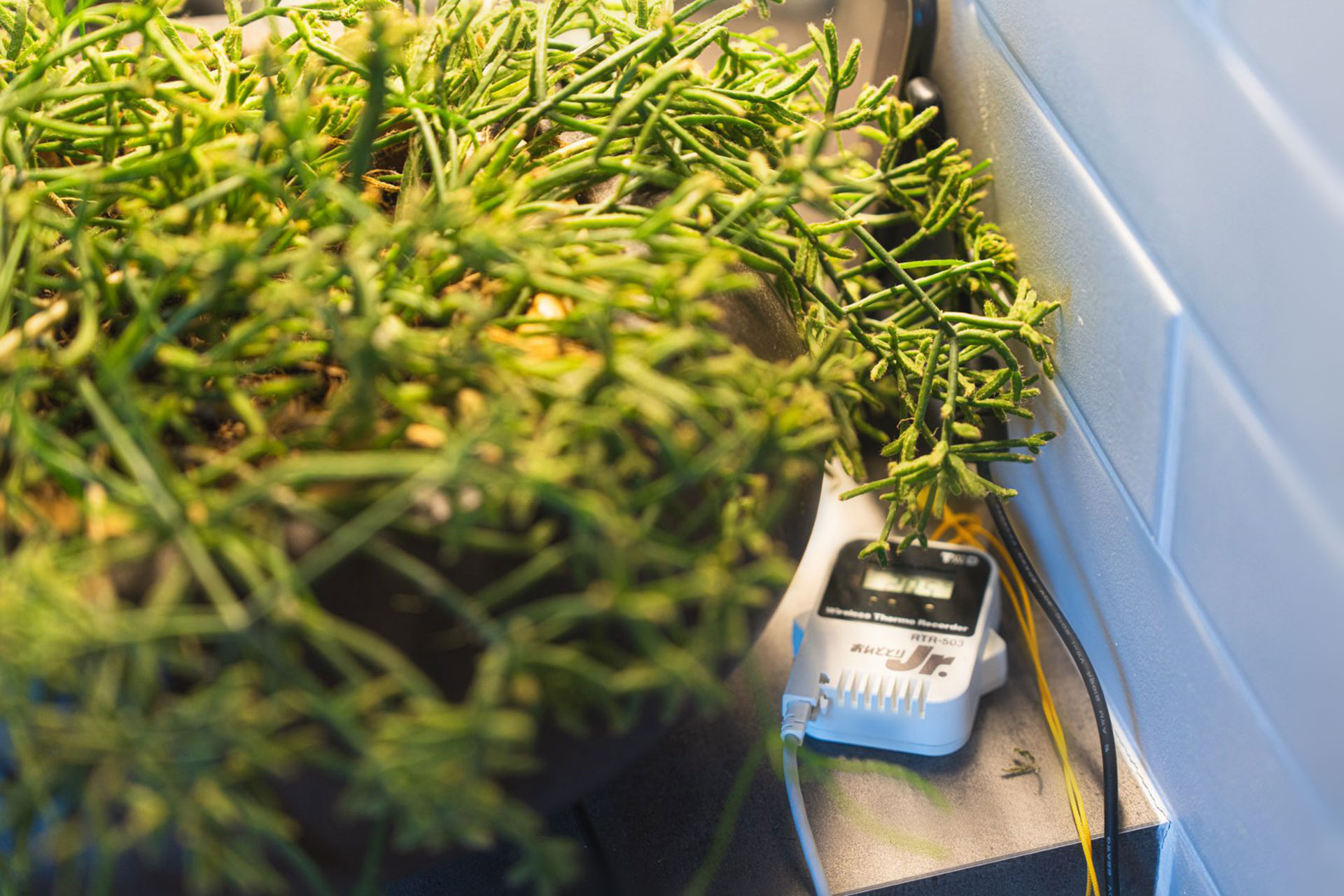
Mr. Hashimoto
We share real-time temperature and humidity data at exhibitions and in our model homes so customers can experience the insulation performance for themselves.
In the model home, we monitor not just living spaces, but also areas like the attic, underfloor spaces, and even within structural components.
We’ve also installed data loggers in our factory testing facilities, where we compare the performance of different insulation materials.
Were there any challenges in integrating T&D data loggers with your system?

Mr. Hashimoto
Before our current setup, we used an earlier network-connected base station with built-in web server functionality (a T&D OEM product).
At that time, low-cost mobile data services were not widely available, making it difficult to secure a reliable communication line when installing the system in customers’ homes. There was also no “T&D WebStorage Service” (a free cloud service provided by T&D) yet, so we had to extract temperature and humidity data manually using the device’s browser-based viewer and then store it in our own database.
Later, when we transitioned to T&D’s RTR-500AW base station, we were able to upload data directly to an FTP server, which made data accumulation much easier.
Compared to our previous setup, it also enabled automated data transmission and easier integration with external servers, significantly improving operational efficiency.
Today, we use a combination of tablets and low-cost SIM cards to transmit data.
When we started publishing real temperature data from customers’ homes on our website using this system, the response was tremendous.
The ability to share actual performance data drew significant attention, and we received inquiries every day—including from others in the same industry.
――Mr. Hashimoto also shared an interesting story.
One homeowner’s wife once checked the indoor temperature remotely while she was on a business trip. Despite it being midwinter, the indoor temperature had reached 28°C (82°F).
Worried that something was wrong, she immediately called her husband—only to find out he was hosting a gathering with several friends. The heat generated by the group had raised the room temperature significantly.
“In a highly insulated environment, even small heat sources can have a big impact,” Mr. Hashimoto explained.
A Commitment to Verification
At one point during the interview, Mr. Hashimoto said, “Because we’re in the position of providing high-performance homes, we want to make sure—through experimentation—that what we offer truly delivers on its promise.”
Those words were reflected in everything we saw: walls built with varying internal structures for comparison, test buildings constructed for controlled experiments, and a continuous effort to collect and analyze real-world data.
What stood out most was not just the technology, but the mindset—a commitment to building performance backed by real data.
Just as striking was the underlying motivation: a desire to provide truly comfortable homes for people living in Iwate, where winters can be especially harsh.
Looking Ahead
Mr. Hashimoto is also proactive in adopting new tools, especially when it comes to communication. In addition to X, he actively uses Instagram. One of his posts, created as part of his own efforts to learn social media, reached over one million views in just three days.
His goal is clear: to connect with younger audiences. Even if people in their early twenties aren’t building homes today, they may become future homeowners. By sharing their work now, he hopes to build awareness and trust with the next generation.
Through this visit, we saw a company driven not by assumptions, but by experimentation and data.
Daikyo Home continues to ask a simple but powerful question:
What does true comfort look like?
Their answer lies in real measurements—and in a determination to prove performance through evidence.