Note: Names of organizations, offices, departments, etc. in the article are as of when the article was first published.
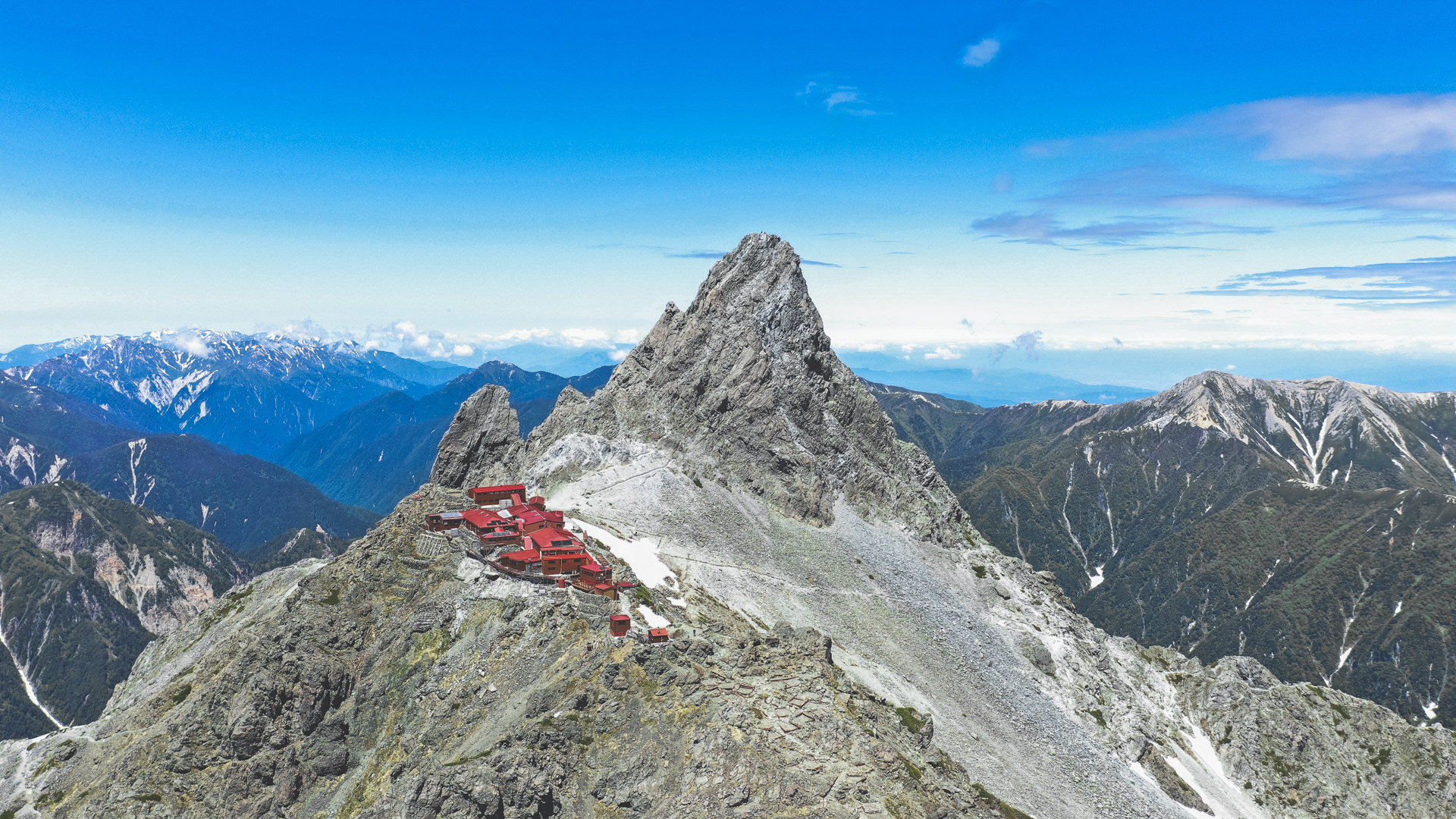
For many mountaineers, Mt. Yarigatake is a dream destination. Known as a symbol of Japan’s Northern Alps and often called the “Matterhorn of Japan,” its sharply pointed peak rises to 3,180 meters (10,430 ft).
Just 100 meters (330 ft) below the summit, perched along the narrow ridge, stands Yarigatake-sanso Lodge, a mountain lodge that has supported climbers for a century.
For over two decades, Yarigatake-sanso Lodge has provided real-time information on mountain conditions through live cameras and weather data. This initiative helps climbers understand conditions in advance and make safer decisions before heading into the mountains.
As part of this effort, T&D’s WS-2, a device designed to transmit data from weather stations to a server, had long been used to publish weather observation data on the lodge’s website. Connected to a Vantage Pro2 weather station console, the system automatically transmitted real-time measurements to a server.
Installed in 2008, the WS-2 continued operating reliably for many years in this harsh environment. However, as the product was discontinued in 2014, maintaining it with replacement parts was becoming increasingly difficult.
With this in mind, we visited Yarigatake-sanso Lodge in October 2020 to replace the system with a custom-designed data collection device.
| Date | October, 2020 |
|---|---|
| Place | Yarigatake-sanso Lodge |
| Models in Use | WS-2, Custom Data Collection Device, RTR500BW, RTR502B, RTR507B |
| Purpose | Providing weather information for climbers |
Upon arrival, we met Mr. Daisuke Hokari, the fourth-generation owner of the lodge, and Mr. Matsumoto, who has long supported the lodge’s communication systems.
Inside the facility, communication devices such as routers were carefully housed in insulated boxes equipped with heaters, allowing them to operate even during the severe winter months. Power was supplied through a combination of diesel generators and solar panels, with timers used to conserve energy.
We also saw the WS-2 unit that had been operating for over a decade. With appreciation for its long service, we replaced it with a custom-designed system.
The new device significantly reduces power consumption. By activating wireless LAN only when transmitting data, it can run for more than six months on just two alkaline batteries. Designed with cloud-based data management, it is well suited for environments like mountain lodges, where resources are limited.
On the roof, weather sensors stood exposed to strong winds, installed alongside a large lightning detection system.
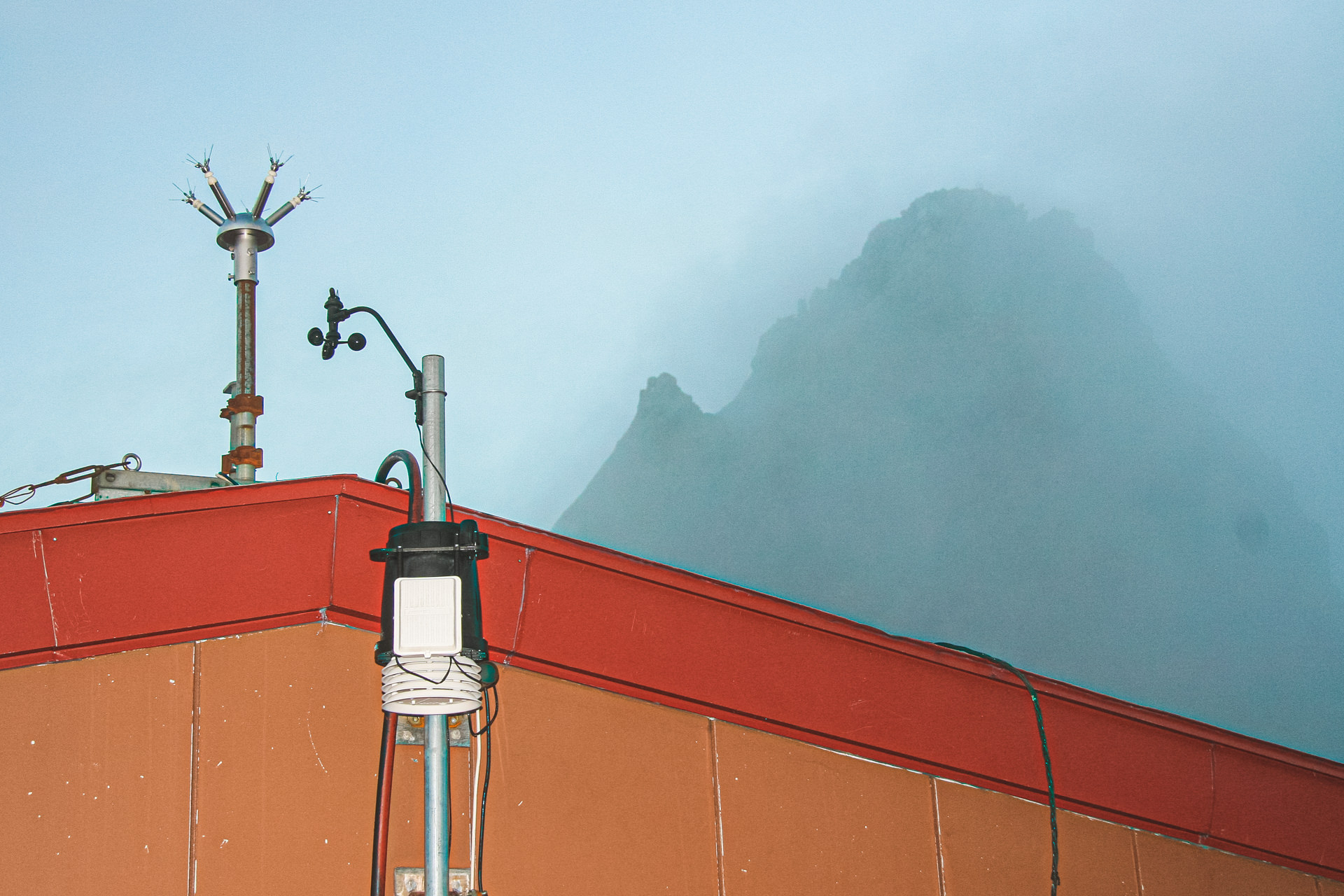
Weather sensors enduring the harsh environment of Mt. Yarigatake
At first glance, the weather sensors appeared almost fragile. Yet they had endured years of harsh weather while continuing to provide valuable information for climbers.
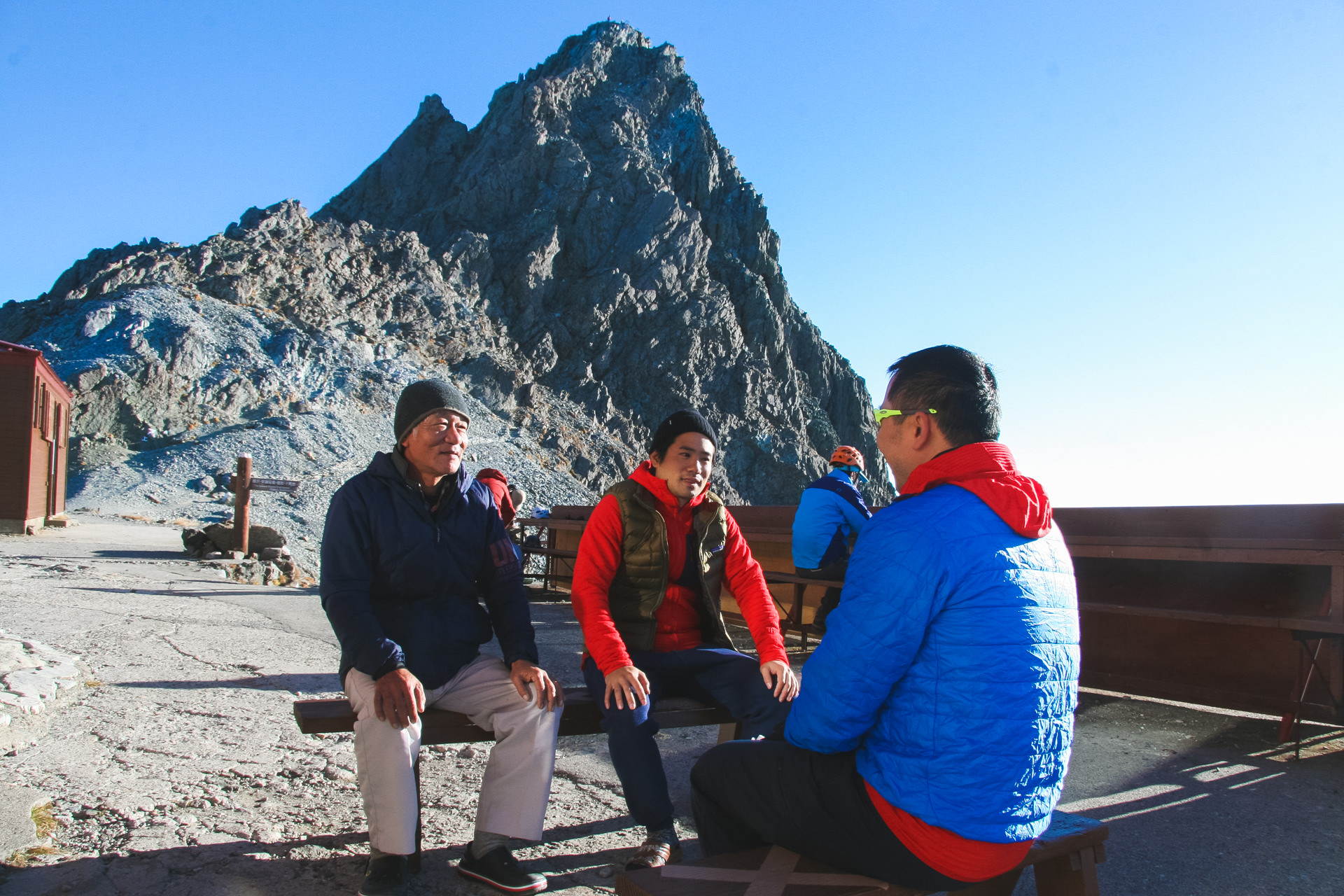
After sharing a meal, we spoke with Mr. Hokari and Mr. Matsumoto about life and work at Yarigatake-sanso Lodge.
Can you tell us about Yarigatake-sanso Lodge?
The lodge itself has a long history. Originally built in 1926, the lodge celebrates its 100th anniversary in 2026.
Building a mountain lodge in such a remote and rugged location—long before modern infrastructure—required extraordinary effort.
“There are photos in the lodge,” Mr. Hokari explains. “Back then, people climbed these steep mountain slopes carrying multiple pieces of timber on their backs. Everything had to be brought up by hand.”
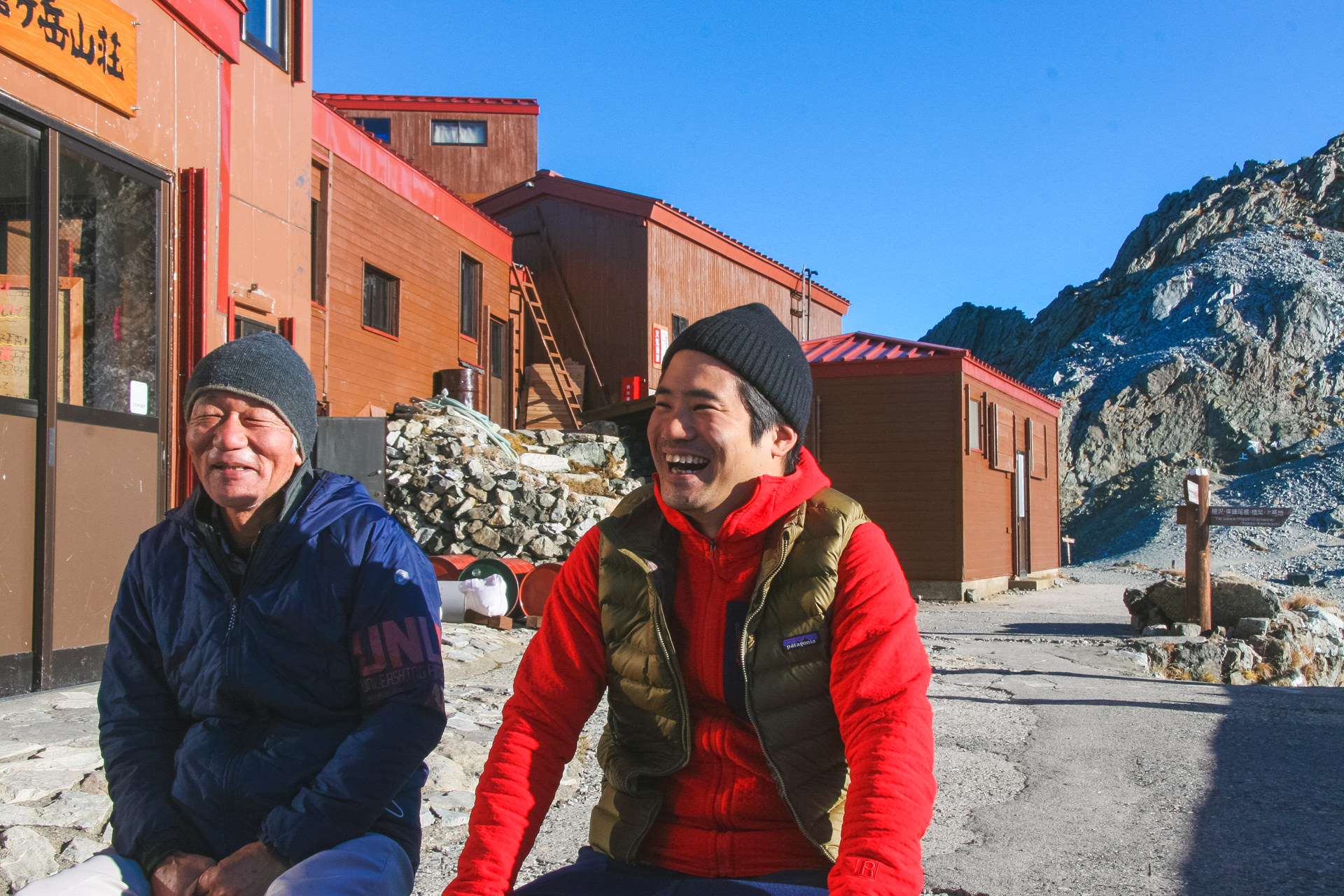
Mr. Matsumoto (left) and Mr. Hokari (right)
Daily Life at a Mountain Lodge
Life at the lodge demands versatility and resilience.
“If something breaks, we can’t just call someone to fix it,” Mr. Hokari says. “We handle everything ourselves—cleaning, cooking, sewing, carpentry… You make do with what you have. It’s a good place to develop the ability to live.”
Water is entirely sourced from rainwater collected on the roof and stored in tanks, with a capacity of around 50,000–100,000 liters (approximately 13,000–26,000 US gallons). Electricity is generated through diesel engines and solar panels. In many ways, life at the lodge is completely self-sufficient.
Maintaining mountain trails is also an important part of the lodge’s work. Although the area around Mt. Yarigatake is located within a highly protected national park zone, responsibility for maintaining the trails has long been supported by mountain lodges like Yarigatake-sanso.
Beyond providing accommodation, mountain lodges also serve as places of refuge and rescue for climbers—playing an essential role in making mountain travel possible.
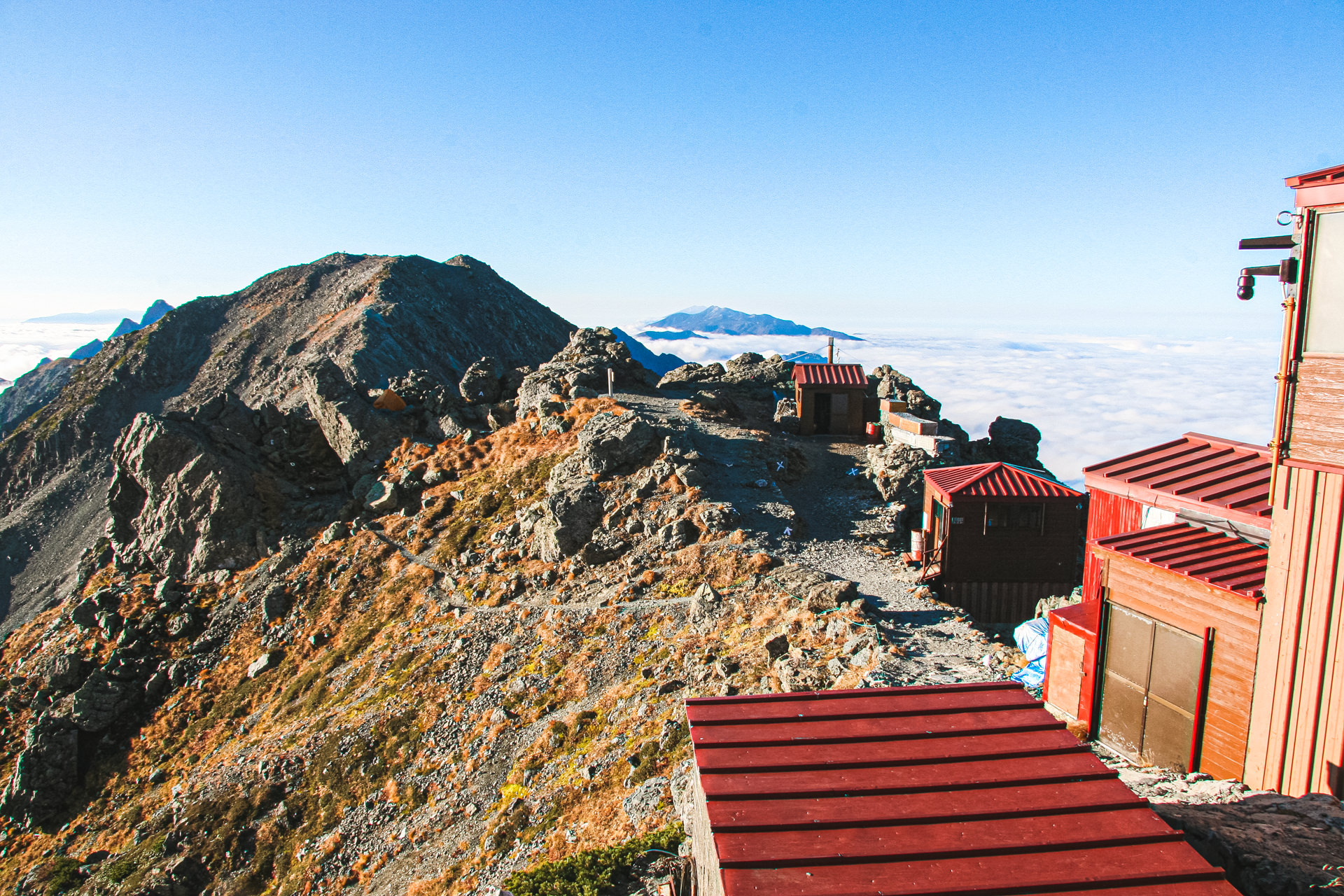
A Local Solution for Weather Monitoring
Observation at the lodge was originally conducted at the request of a weather association. However, the costs became too high, and the project was eventually discontinued.
“At that point, we were wondering what to do next,” recalls Mr. Hokari. “That’s when we were introduced—through a local connection—to T&D, a company based in nearby Matsumoto City known for making reliable equipment.”
Mr. Matsumoto adds a practical perspective: “If maintenance depends on technicians coming from distant cities like Tokyo, it takes time—and travel costs can be high. We needed a more practical and affordable solution from a local company.”
Trial and Error at High Altitude
Maintaining communication systems in such an extreme environment required years of experimentation.
Early systems combined mobile phones, modems, and network cameras. At first, cameras were installed indoors, but reflections on the glass made images unusable. Moving them outdoors introduced new challenges—strong winds would loosen mounting screws, causing cameras to rotate over time.
Heating systems were added to keep equipment operational in freezing conditions, but winter power shortages sometimes made continuous operation impossible.
“We failed many times,” Mr. Matsumoto recalls. “But Mr. Hokari’s father, the former president and current chairman of the lodge group, was always very patient and supportive.”
Over time, through repeated trial and error, the system gradually stabilized.
The Importance of Real-Time Information
Today, cloud-based data loggers offer new possibilities.
“Being able to check conditions remotely is extremely helpful,” says Mr. Hokari. “Especially in winter, when we’re away from the lodge, it gives us peace of mind.”
For climbers as well, access to real-time data is a major advantage.
Mr. Hokari continues:
“The conditions in the mountains are completely different from those in the city. Being able to see real-time data—and even trends from previous days—helps improve safety.”
In addition to weather observation, T&D data loggers are also used to measure outdoor temperatures and monitor temperature and humidity inside the equipment box in an environment where temperatures can drop below -30°C (-22°F).
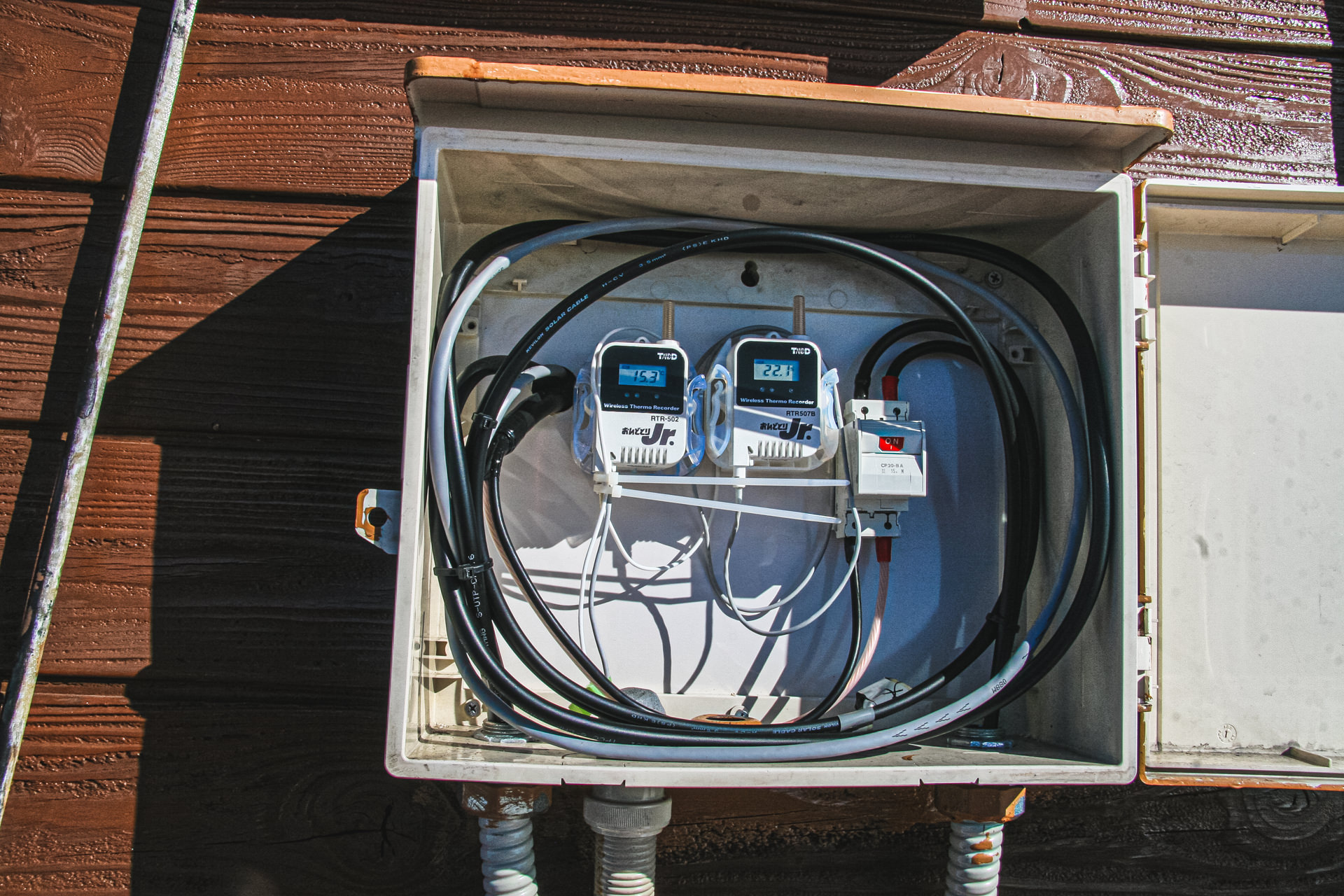
Mt. Yarigatake’s striking form, the people who work there, and the technology that supports them—each plays a role in this remarkable mountain environment.
That T&D data loggers, developed in Matsumoto, are able to operate in such demanding conditions is something we take great pride in.
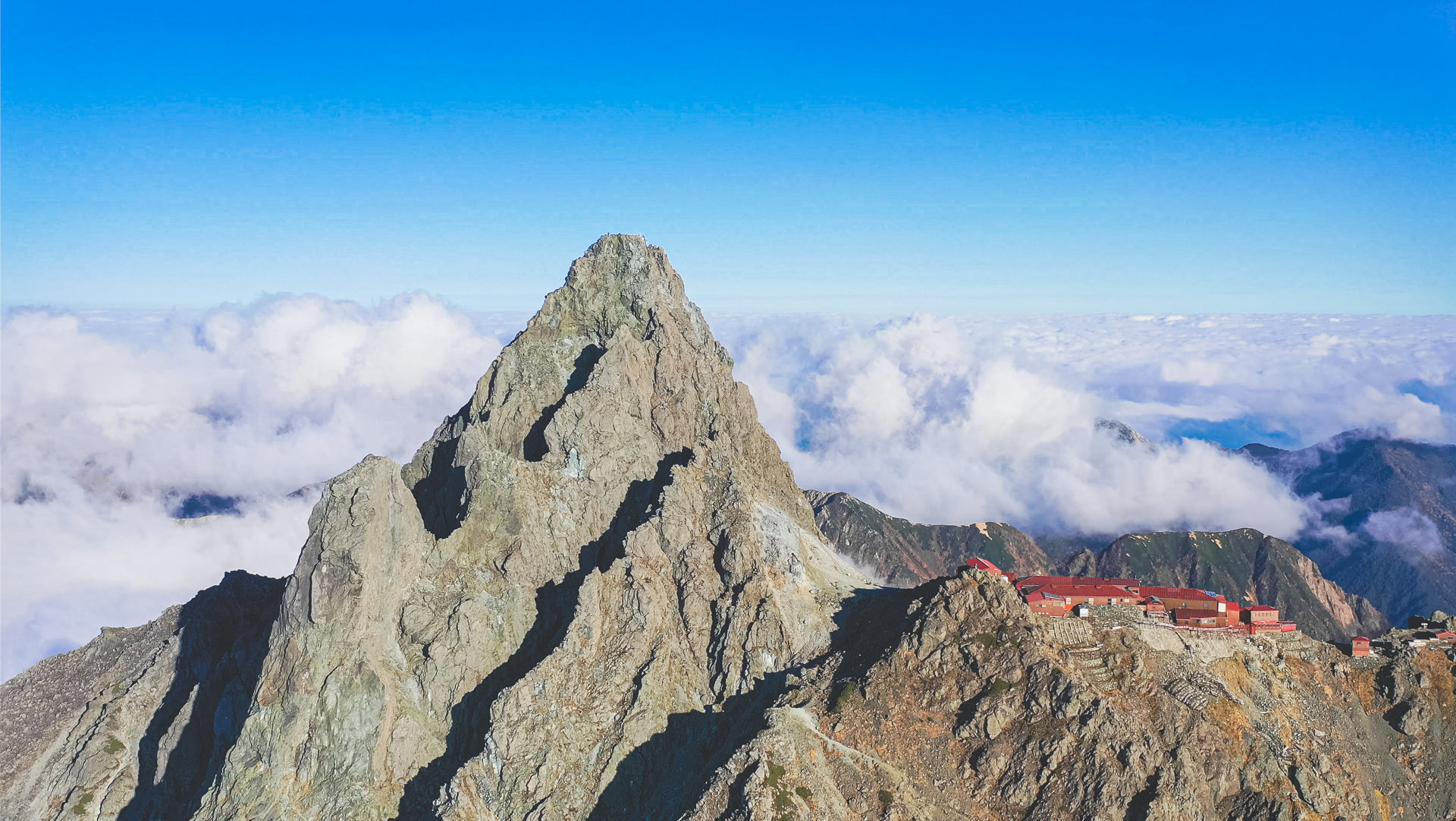
Header and footer images © Yarigatake Sanso Group