

Note: Names of organizations, offices, departments, etc. in the article are as of when the article was first published.
This time, we visited the 21st Century Museum of Contemporary Art, Kanazawa, where T&D data loggers were being used as part of a conservation project for a contemporary artwork. The story began when one of our employees visited the museum and noticed a T&D data logger in one of the galleries. Curious about what it was doing there, we looked into it and discovered that it was being used in a conservation project for Car Refrigerator, a work of contemporary art.
Why would temperature and humidity data be needed for an artwork? And how was the data actually being used? Wanting to learn more, we contacted the museum and were kindly given the opportunity to speak with the people involved in the project.
| Date | August 3, 2026 |
|---|---|
| Place | 21st Century Museum of Contemporary Art, Kanazawa |
| Model in Use | TR72A2 |
| Purpose | Temperature and humidity monitoring of Car Refrigerator as part of its conservation project |
| Exhibition Period | April 25–September 6, 2026 |
A Museum Created as a New Cultural Hub
The 21st Century Museum of Contemporary Art, Kanazawa was established with two main goals: to bring new vitality to the city and to create new culture. In the 1990s, as public facilities moved out to the suburbs, central Kanazawa was losing its vibrancy. There was a growing need for a place where people could gather and interact. Kanazawa also has a deeply rooted culture of crafts and craftsmanship, and there were calls for a place where artists could present their work and connect with the public. In response to these needs, the museum was created as a new cultural hub.
A Car That Becomes a Refrigerator
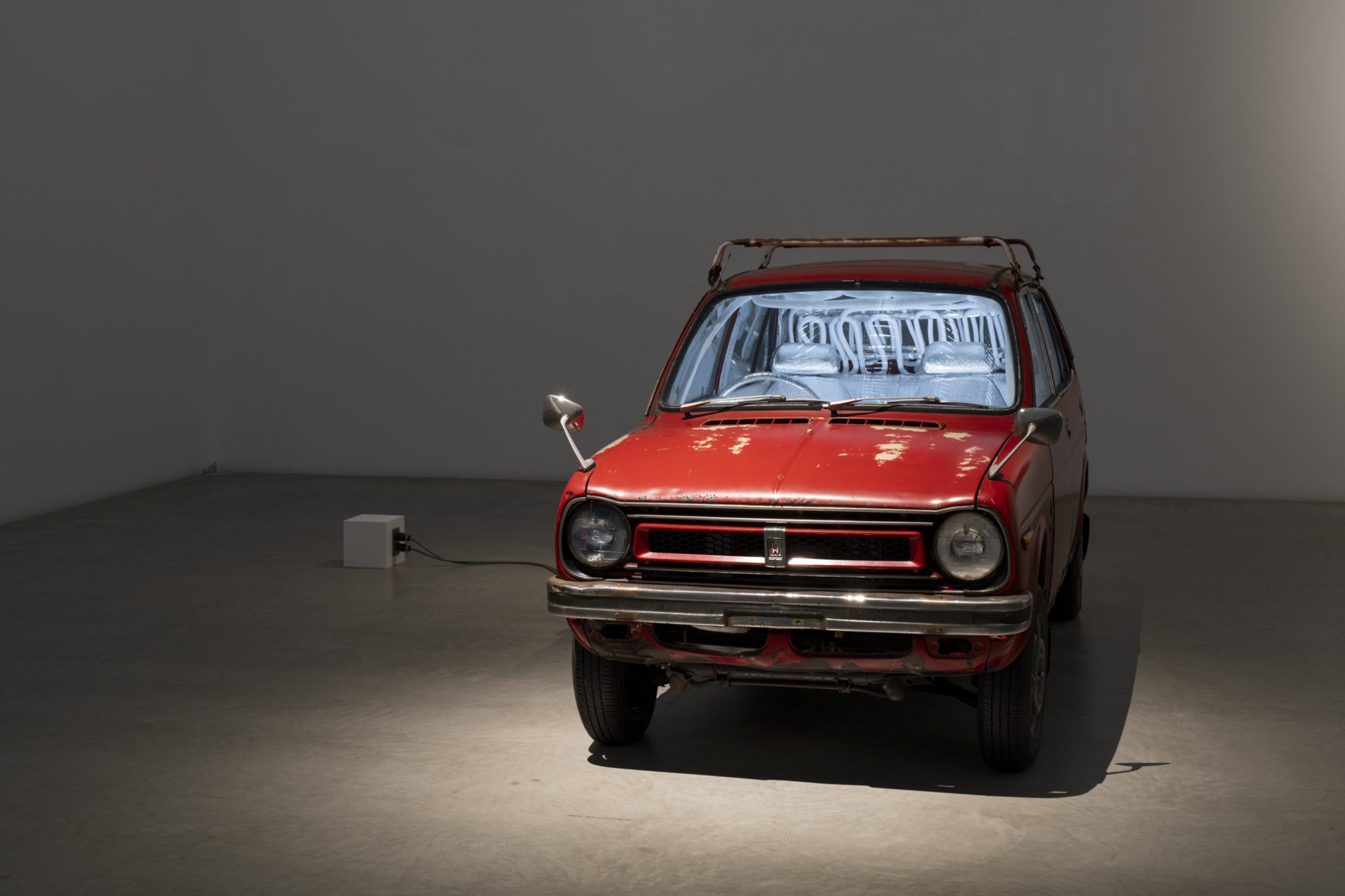
At the center of this story is Car Refrigerator, a work by Japanese contemporary artist Osamu Kokufu. As the title suggests, the car itself has been turned into a refrigerator. A cooling system was installed where the engine would normally be, transforming the interior of the car into a giant refrigerator.
We asked Ms. Taguchi about the idea behind the work.

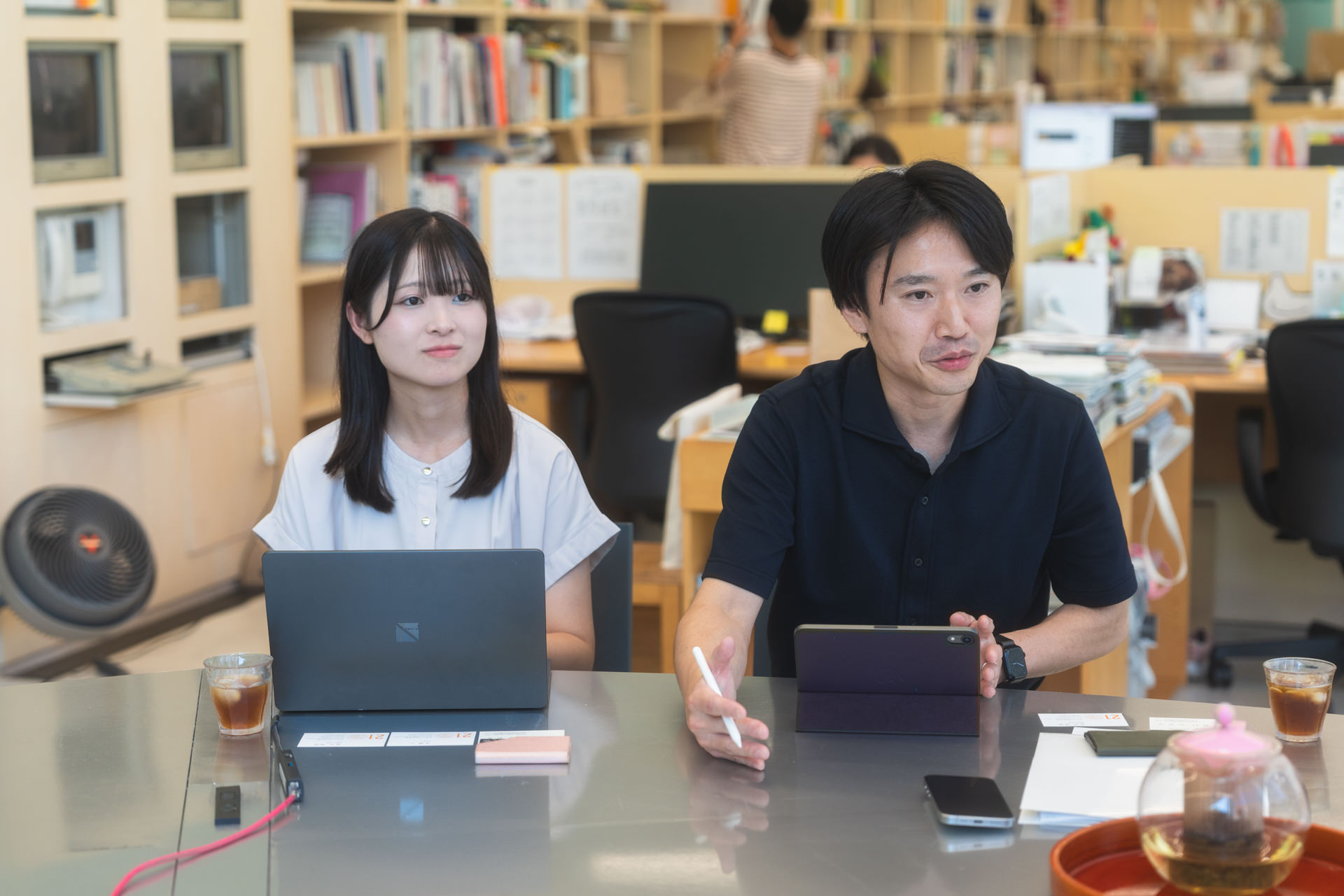
Ms. Taguchi, conservator and associate professor at Kyoto University.
Ms. Taguchi
Normally, a car carries people quickly through space. A refrigerator, on the other hand, cools things to slow down decay and change. In that sense, a refrigerator can be seen as a device that acts on time.
By combining these two very different things, the artist transforms a vehicle that moves through space into one that moves through time. It evokes science-fiction ideas such as cryogenic sleep or a time machine.
The car used in the work was actually the artist’s own vehicle. So an everyday object becomes connected with much larger themes: science and technology, time, and human life.
Another fascinating aspect is that the work continues to change while it is on display. When the cooling system is running, frost forms on the pipes and gradually grows. While the cooling system creates the impression that time has stopped, the growing frost reminds us that time is still passing. With many artworks, we encounter what appears to be a single completed state. With this work, however, the changes that occur over time are themselves part of the viewing experience.
Bringing Car Refrigerator Back to Life
The work had been stored outdoors for a long period, and rust had spread across the body of the car. Its paint, rubber seals, and mechanical components had also changed with age. For many years, it had not been exhibited with its cooling system operating. The conservation project began with a question: Could the work function once again as a “refrigerator”?
But conserving a work of art is not as simple as repairing an ordinary machine and replacing old components with new ones.
Ms. Taguchi
How much of the original material from the time the work was created should be preserved? Should rust and scratches caused by aging remain as evidence of the time the artwork has lived through? How much should we intervene in order to operate it safely?
There is no single, perfect answer. What matters is considering the different options, documenting why particular choices were made, and sharing that process.
The same questions apply to the cooling system itself. The system at the heart of the artwork is still the original one from when the piece was created, and it is still operating today. But no one knows how long that will continue. If it eventually stops working, should it be replaced? Or should the artwork be preserved even if it can no longer cool?
Replacing the system could change the way the car cools, the sounds it makes, and even the way frost forms. Decisions like these are therefore an important part of thinking about the future of the work.
Watching Over a Work That Continues to Change
As part of this effort, students and artists participating in a project called “Mimamori AIR” (“mimamori” means “watching over” in Japanese) observed the artwork every day and recorded what they noticed, along with visitors’ reactions. For Ms. Taguchi, this idea of “watching over” the work was particularly important.
Ms. Taguchi
Car Refrigerator is difficult to maintain in one fixed state. It changes depending on temperature and humidity. So rather than trying to keep the work under strict control, our approach is closer to gently “watching over” it while staying attentive to its changes.
A conservation project does not simply end once an artwork has been repaired and put on display. The time it spends on exhibition is also part of the ongoing effort to preserve the work for the future.
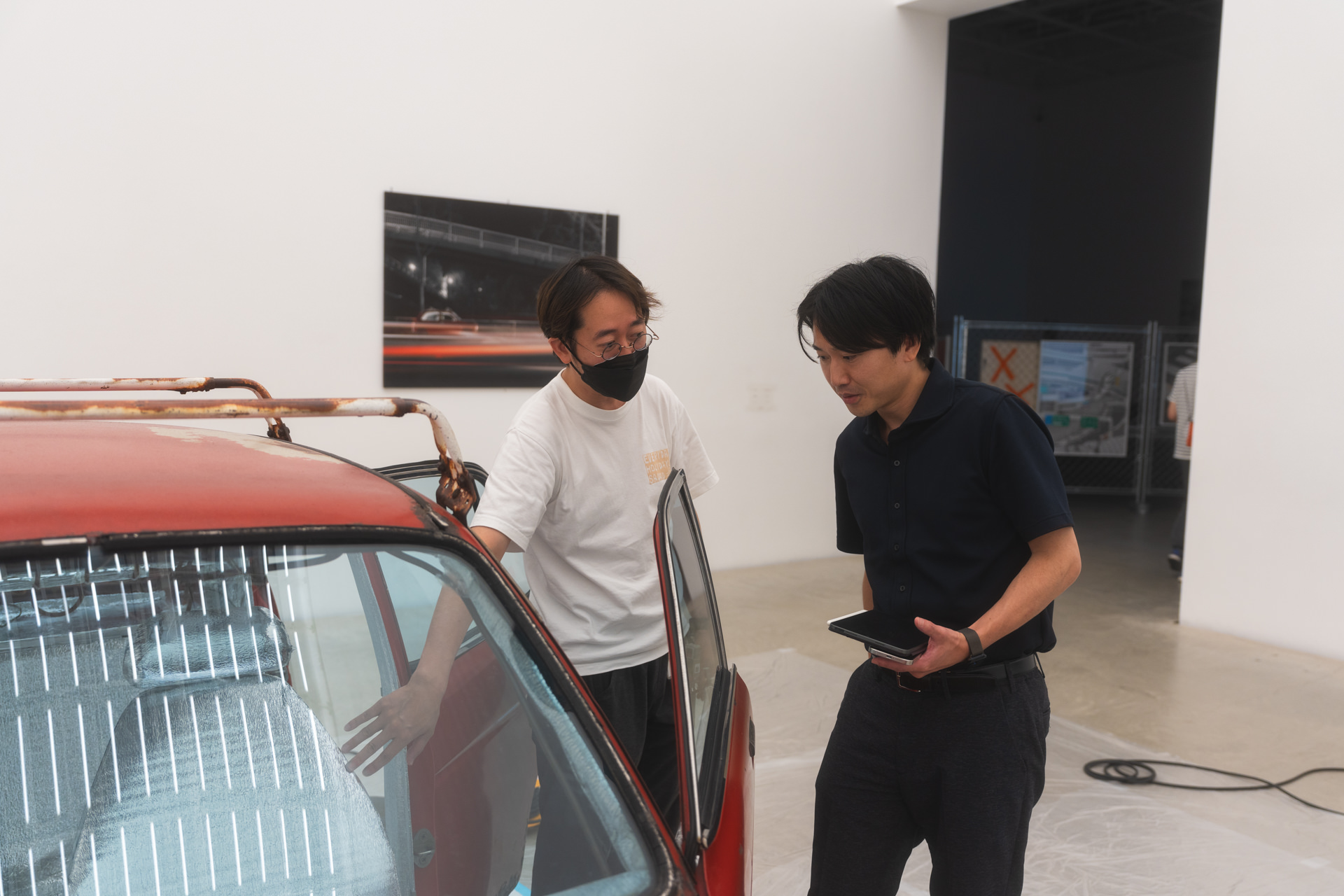
Mr. Motohashi, curator at the 21st Century Museum of Contemporary Art, Kanazawa.
How Temperature and Humidity Affect Art
At first glance, artworks in a museum may seem to remain unchanged. In reality, however, they are constantly undergoing subtle changes as they interact with their surrounding environment.
Temperature and humidity are an important part of that environment.
Ms. Taguchi
As long as an artwork is made of physical materials, temperature and humidity directly affect its condition. Some changes happen quickly and others slowly, but every work changes little by little.
Paper and wood, for example, absorb and release moisture from the air. Changes in humidity can cause wood to warp or paint to crack and flake. Excessive humidity can encourage mold growth, while overly dry conditions can cause wood to shrink.
But there is no single temperature or humidity level that is perfect for every artwork. You need to understand what the work is made of, when it was created, and what condition it is currently in before deciding what kind of environment is appropriate.
For Car Refrigerator, temperature and humidity data have another role as well. They provide a record of the conditions under which the frost forms and grows.
Keeping Watch from a Distance
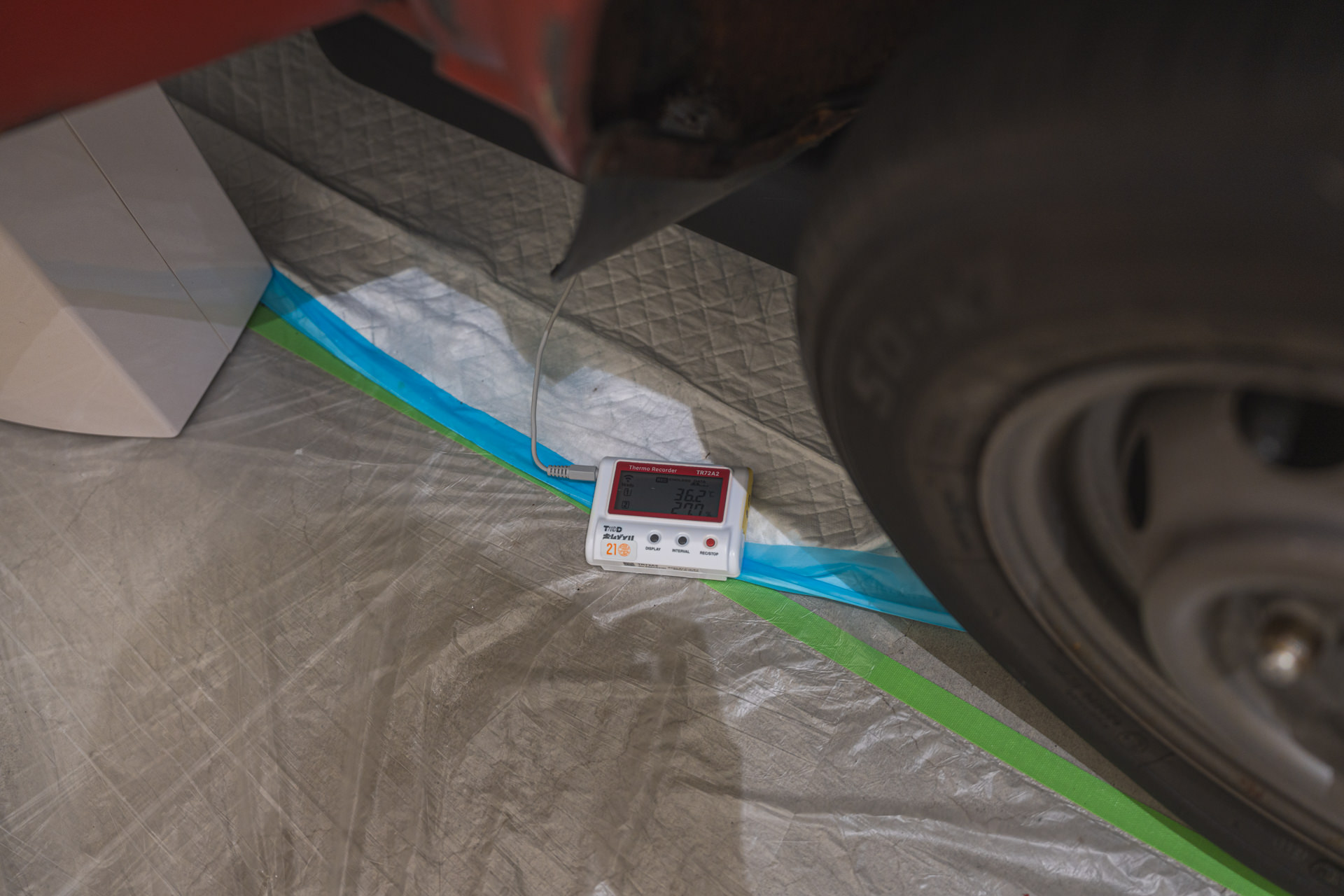
T&D data loggers have long been used in museums and conservation work, and the 21st Century Museum of Contemporary Art, Kanazawa also uses them to monitor temperature and humidity in its galleries. For the Car Refrigerator project, continuous temperature and humidity data were needed to better understand the conditions under which the frost grows.
Ms. Taguchi explained that the project brings together museum staff, outside researchers, engineers, students, artists, and other participants. Because the members belong to different organizations, the project team needed a way to access the data independently.
Using the TR72A2, data can be uploaded automatically over a wireless LAN and checked remotely, without someone having to operate the logger each time. That makes it possible for the team to keep an eye on changes in the artwork even when they are not physically at the museum. As Ms. Taguchi put it, it feels like everyone can “watch over” the artwork together.
The Artwork’s “Vital Data”
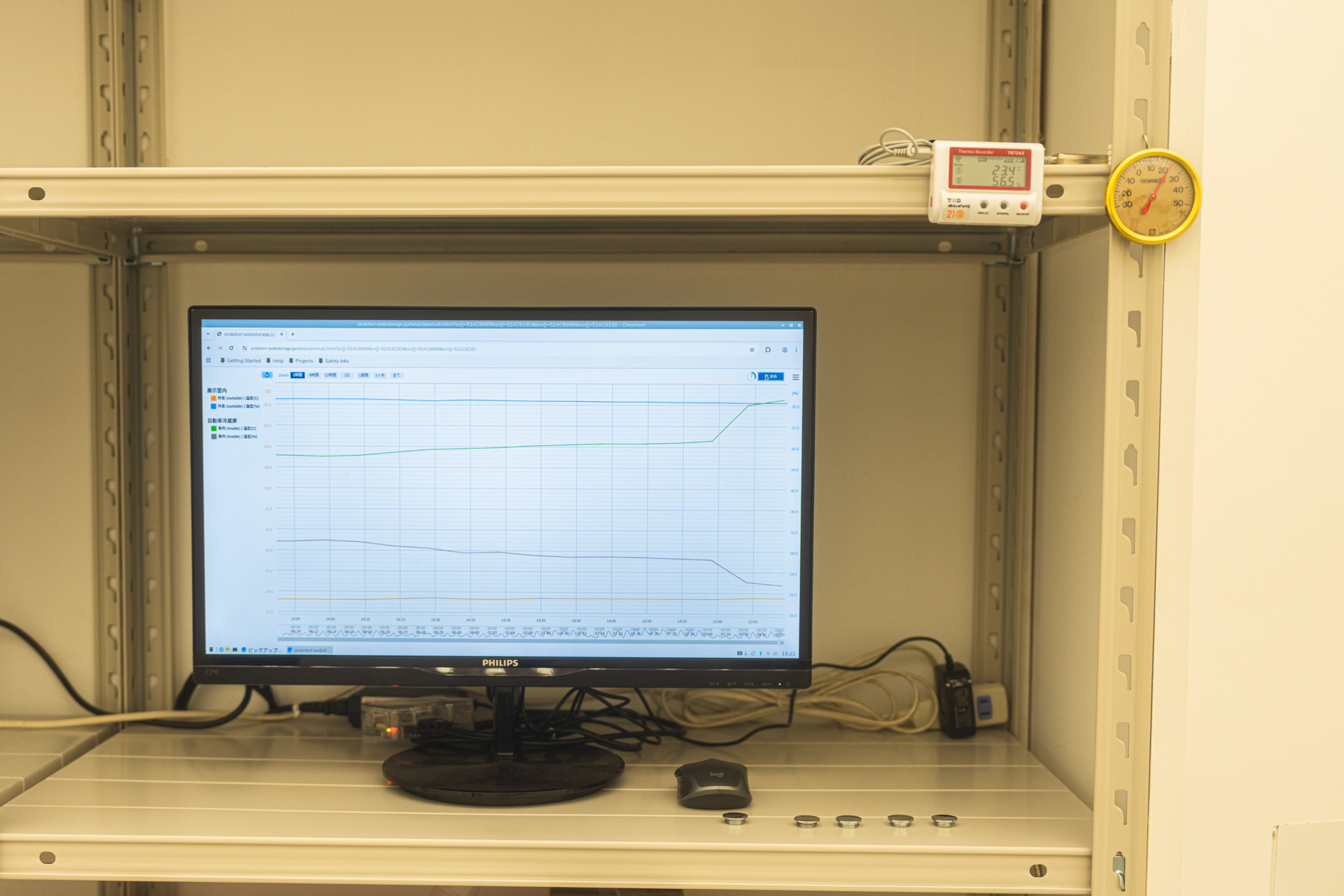
There was one more unusual aspect of the project. The temperature and humidity data were not kept behind the scenes. The graphs were displayed on a monitor in the gallery for visitors to see.
Why make monitoring data part of the exhibition?
Ms. Taguchi
The fact that the frost is growing means that changes are continuously taking place inside the artwork. We thought that displaying the data on a monitor—almost like looking at a person’s vital signs—would help visitors feel that the artwork is active and changing right before their eyes.
The frost itself also changes from day to day. A visitor returning a month later might find it looking completely different. Temperature, humidity, the seasons, and the passage of time all affect the appearance of the work. In that sense, Car Refrigerator is not an artwork you simply see once and are finished with.
Visitors can compare the “vital data” on the monitor with the artwork in front of them and wonder, “What is happening inside this work right now?” A week later, or a month later, it may have changed dramatically again. The changing frost gives visitors a way to experience the passage of time through the artwork itself.
Note: This exhibition ended on September 6, 2026.
A Museum to Experience Again and Again
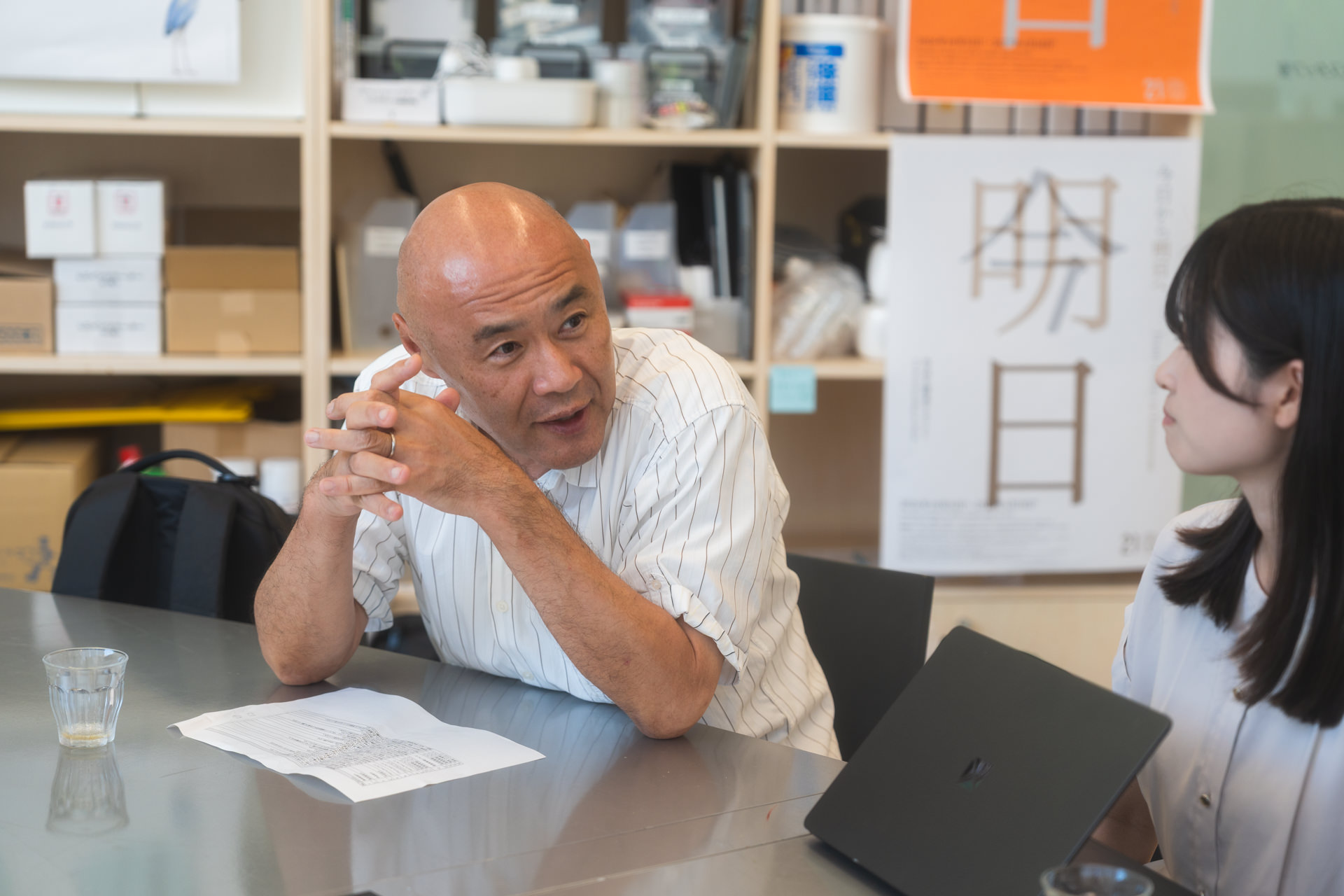
Mr. Ochiai of the museum’s Public Relations Office.
Mr. Ochiai explained that this same sense of change can be found throughout the 21st Century Museum of Contemporary Art, Kanazawa. The building has a strong sense of transparency, and its spaces come alive as people move through them. Visitors are encouraged to find a place they particularly like and simply spend some time there.
Alongside permanent works, the museum offers exhibitions and events that change over different periods of time. A visit today, therefore, does not mean you have seen everything the museum has to offer. Return six months later, and you may encounter a completely different scene.
It is a place designed to be experienced more than once.
In Closing
On the day of our interview, the museum was closed to the public, and the team was carrying out a defrosting process to melt the frost that had grown inside Car Refrigerator. The temperature rose during the process, but once the cooling system was turned back on, we watched the values on the graph steadily fall. What stayed with me most was the way the temperature and humidity graphs were described as the artwork’s “vital data.” Data like this is usually used behind the scenes to monitor and preserve an artwork. Here, however, it was displayed in the gallery, becoming part of the experience of viewing the work itself.
It was a fascinating example of how measurement can take on a different role in the context of art.
We would like to thank everyone involved for their cooperation and for sharing their insights with us.
21st Century Museum of Contemporary Art, Kanazawa
Mimamori AIR – Observation Journal (in Japanese)